INTRODUCTION.
I first engaged in research at TRU by being directed to join the ‘Student Innovators’ (now known as Research Rookies) by the TRU research team. I wanted to become involved in research so I could achieve a research position in a lab here at TRU, with the goal to publish a research paper. As a Student Innovator, we collected data to help design the research hub in OLARA. We used an office in OLARA and recruited students for feedback on what aspects of a space they would like to see added to the hub. From this, the research team could use the feedback to design what is now known as the research hub!
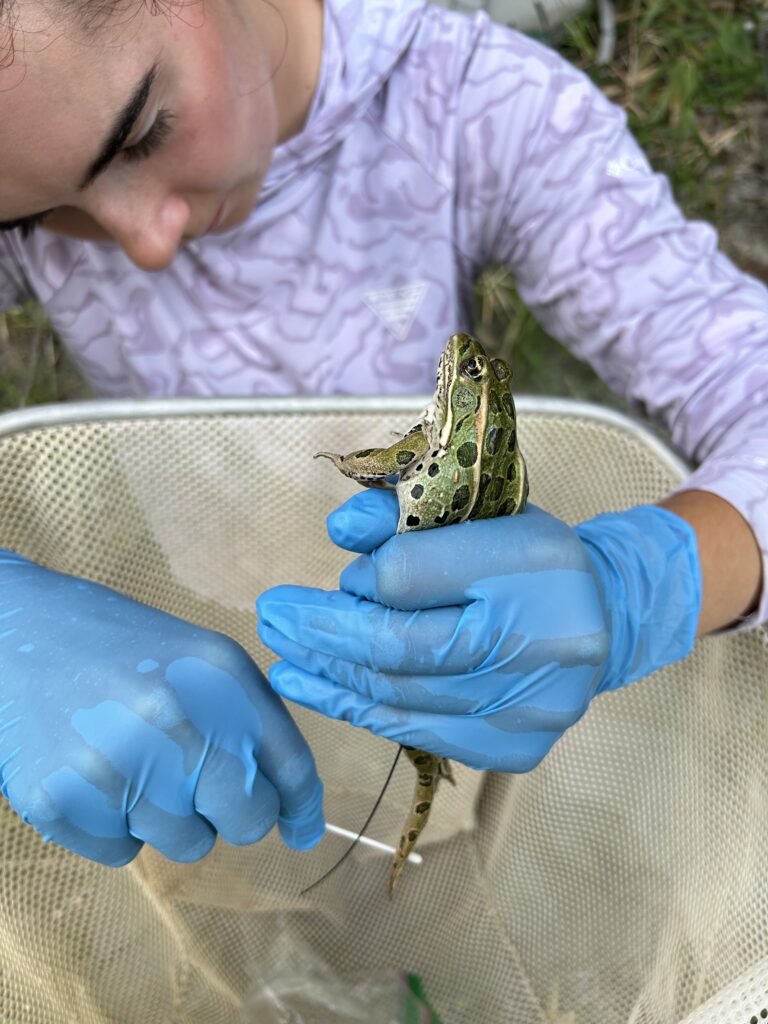
In addition to research field work as a summer job, I joined a TRU Master’s student in the summer of 2025 to help conduct her research on the Northern Leopard Frog (Lithobates pipiens) in Creston, B.C. I joined her team for two days where we tracked the frogs using radio telemetry, changed transmitters, took plot samples, swabbed for deadly fungal infections and PIT tagged young-of-year frogs.
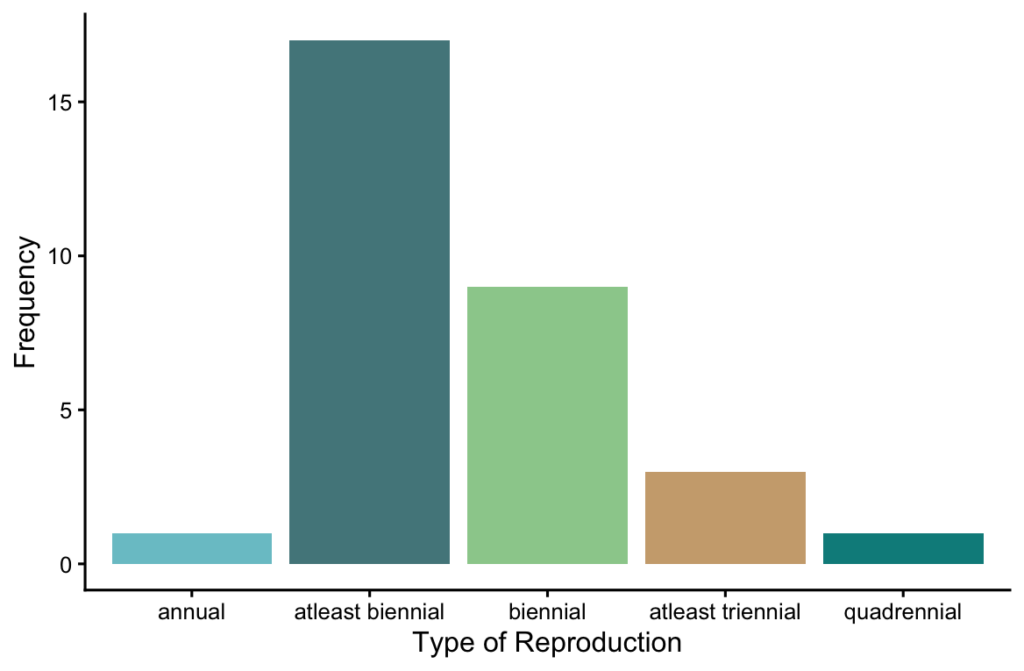
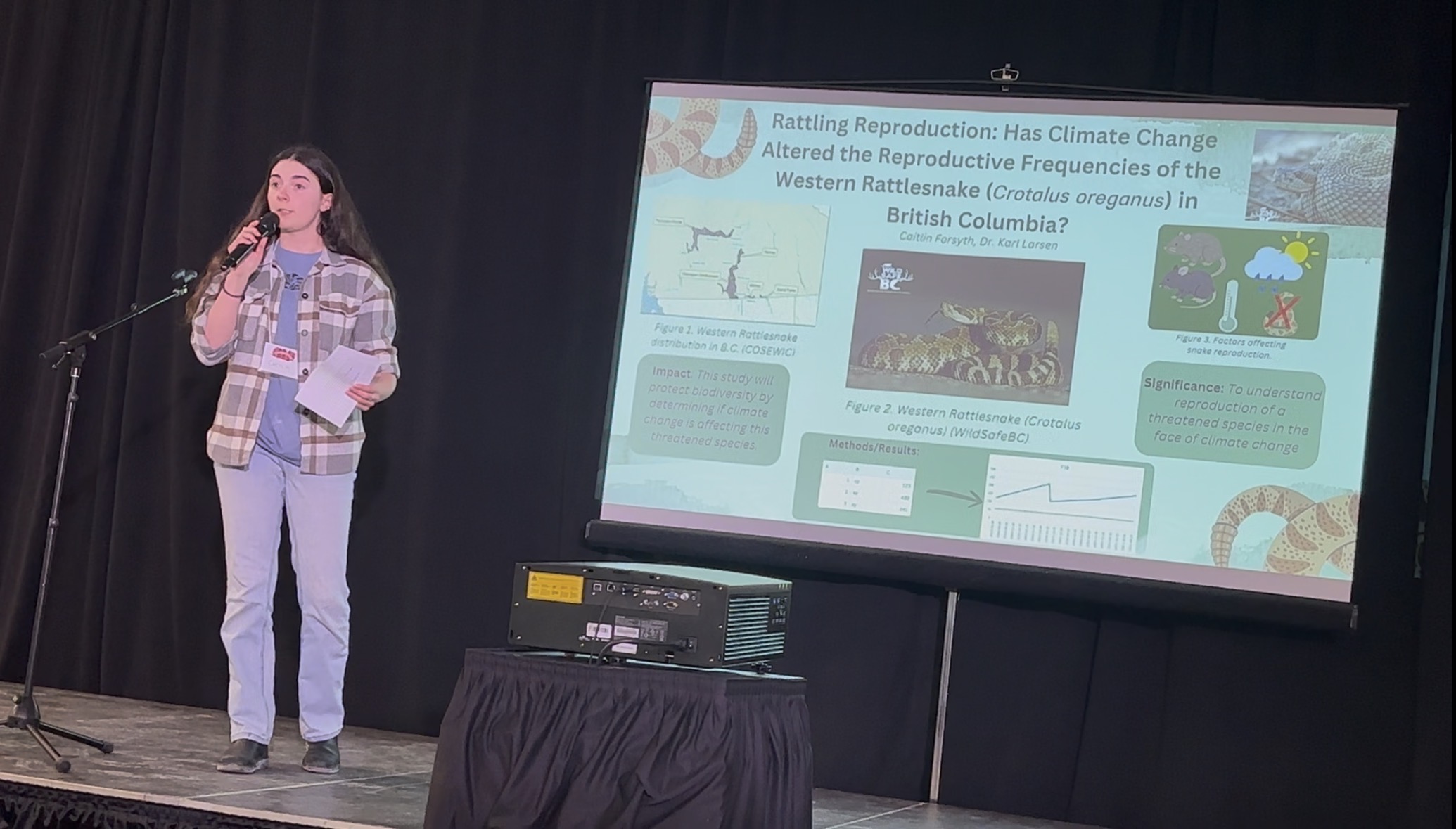
After many failed attempts to find a research supervisor and project, I was fortunate to begin a research project in the fall of 2025. This project uses a database of mark-and-recaptured Western Rattlesnakes (Crotalus oreganus) in Osoyoos, B.C. This data has been used by multiple masters students for various theses and spans over 23 years of data. I will utilizing this database to assess the reproductive strategies of these snakes, who reproduce every two years, and determine if climate changes are pushing the snakes to reproduce more frequently. This work will supplement a similar study conducted in 1988 on the Osoyoos Western Rattlesnake population and can be used as a comparison for reproductive life histories 35 years ago.
THE STANDARDS.
Research evidence:
Research evidence:
Research evidence:
Research evidence:
Research evidence:
REFLECTIVE ESSAY.
Before my enrolment at TRU, I was on a one-track mindset toward becoming a veterinarian. All that consumed me was “how soon can I apply?” and “when will I get there?” I couldn’t enjoy where I was, only focused on my future. I wanted to participate in research because it would look good on my application to vet school, not solely because I was interested in conducting research. All of this changed toward the middle of my degree; I fell out of love with veterinary medicine and needed to start exploring new career avenues. My deepest value is to enjoy whatever I put my mind to, so I continued to do just so. Eventually, everything started to fall into place… and after two failed research attempts, my directed studies finally slithered into my life as a reproductive strategy study on Western Rattlesnakes.
Reptile species are at their northern-most geographical limits in Canada. As animals that receive energy from the sun, they cannot live any more north due to these constraints. Snakes, especially rattlesnakes, are often misunderstood by the public who react out of fear and uncertainty toward the animals. Snakes control the populations of small mammals—often unwanted pests like mice and rats—and as a result, are used in the literature as an indicator species of a balanced ecosystem. Even more, snakes are often looking to avoid interaction with predators and humans, so much so that rattlesnakes are evolving to stop rattling around humans as to avoid detection. My directed studies project—mainly data based—explores how rattlesnakes have shifted their reproduction in response to climate change. The last reproductive study of this species was conducted in 1988, and indicated that the Osoyoos population is mainly biennial (reproducing every two years). The study indicated that factors such as climate change could influence the population to reproduce at an annual rate under the right conditions. The Canadian populations of the Western Rattlesnake have been deemed as ‘Threatened’ under the Species At Risk Act (SARA), meaning my research of this species is more critical than ever for this snake.
Participating in student research has allowed me to gain connections with students and their projects in the Wildlife lab. The passion that each student holds for their study species is incredible and has absolutely changed my outlook on research. I feel honoured and lucky to contribute to the limited field of Canadian herpetology research. I am proud to say I plan to publish my research in an academic journal as a product of my study. My work, along with other masters students and my supervisor, have inspired me to pursue a masters degree in the near future. This is ultimately to reach my career goal of becoming a Registered Professional Biologist. The passion and personalization that students hold for their projects has inspired me to create a project of my own! The research experiences that I have collected thus far will create the groundwork to conduct my masters project. These experiences will secure my career as a future wildlife biologist.
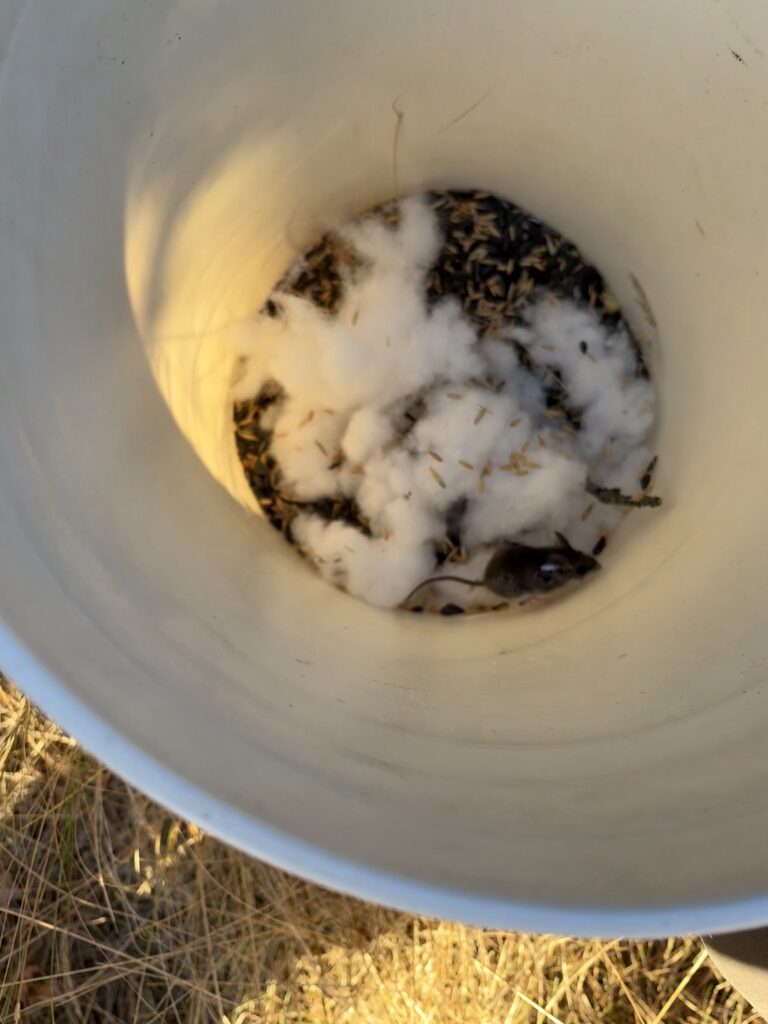
From the range of research I have been involved in there have been challenges and triumphs to overcome. Literature reviews and project proposals have laid the groundwork to understand how a research project is accomplished. “Introduction to Research (BIOL 3980)” filled in the supplementary gaps to this groundwork, like how to apply for funding and what steps to take when conducting a project. Critical reviews and annotated bibliographies have taught me how to assess the validity of academic writing. I feel fortunate to have engaged in class research studies during my Natural Resource Science courses where I contributed to a small mammal trapping study and stock assessment of Peter Hope Lake in Kamloops, B.C. Both are critical components of wildlife research, and these projects have instilled a range of field methods applicable to future jobs and research. Additionally, the field experience that I have gained from volunteering will help me out tremendously. I was fortunate to handle an endangered species and conduct radio telemetry, both of which are assets to future jobs in wildlife research. My background in data analysis across R, JASP, and Microsoft platforms will be attractive to employers and supervisors alike. My range of presenting skills will ensure that I am confident and prepared when speaking to committees and panels alike. Continuing projects from proposals to papers will act as a measure of my accountability and resilience during such strenuous tasks.
I am a perfect example of how plans can change when you find something that you love engaging with. My career goals have changed from veterinarian to registered professional biologist, yet my values have stayed the same: to enjoy whatever I choose to do. As I broadened my horizons, how my education fulfilled me became more apparent. Even if I decide to switch my path again, the research involvement I have gained is irreplaceable. Research takes many forms which ensures that my experiences can be applied anywhere, regardless of topic. My knowledge, skills, and efforts in research will be applicable universally, shown by way of my research certificate, and will continue to shape my life for years to come.
(856 words)